Luke Vanderwall
Bones & AllLuke Vanderwall is the red-haired boy Maren meets in the middle of a lake at summer camp, a brief childhood connection that becomes inseparable from her later fear that she has harmed him. The story never directly confirms what happened to him: Luke is reported missing, while Maren’s blood-rimmed fingernails and recurring dreams cast a disturbing shadow over the gap. His character is therefore formed both by the boy Maren remembers and by the uncertainty surrounding his fate.
Identity and Introduction
Maren first sees Luke while swimming across the lake toward the boys’ side. She is a strong swimmer, drawn to the cold, dark water even when the other girls remain in the shallows. Luke appears to be attempting the crossing in the opposite direction. They greet one another and tread water about fifteen feet apart as clouds gather and lifeguards whistle urgently from both shores. They move close enough to touch fingertips. Luke has bright red hair and a face densely freckled; his conspiratorial grin makes their meeting feel, to Maren, almost prearranged.
Maren later reflects that another person might have told this as the beginning of a childhood romance. That framing is deliberately tentative: it conveys the intensity of the memory without turning their short acquaintance into a conventional love story. The lake is a threshold between the boys’ and girls’ sides, but Luke and Maren meet in its center, temporarily beyond the camp’s ordinary divisions and supervision.
The Encounters at Camp
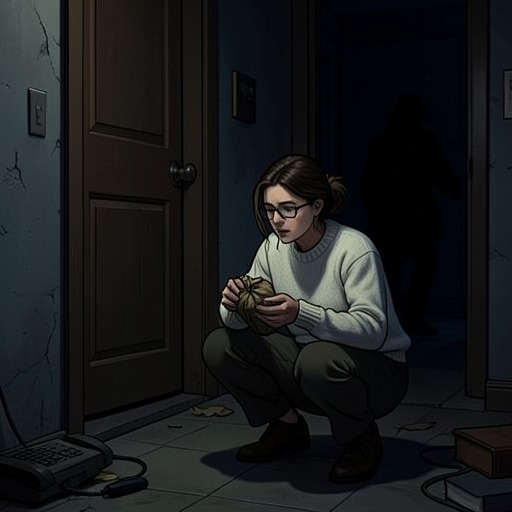
Over the following days Luke finds ways to reach Maren. He leaves notes on her pillow twice, then leads her behind the recreation hall carrying a shoebox. In a sheltered place, he opens it to reveal cicada shells he has collected from the bushes. He explains that the insects shed their exoskeletons once in a lifetime, presenting the discovery as a secret worth sharing. Then he puts one of the shells in his mouth and eats it. When Maren makes a face, he says, “They’re pretty tasty,” and asks why she is reacting with disgust.
The moment gives their companionship a particular texture: Luke is curious, playful, and willing to test the boundary between what is interesting and what is gross. His collection is not merely a prop in their meeting; it introduces eating as part of his casual, unembarrassed behavior. The scene does not establish that Luke understands Maren’s own hunger, or that the two children share the same nature. Its importance lies in the contrast between his lightness about the shell and the dread that later overtakes Maren in his presence.
That dread arrives in the darkness near the red tent Luke has made for Maren. She becomes acutely aware of his smell: the dank, rotten-egg odor of lake water, unbrushed teeth, and chili powder from dinner. The sensory detail precedes an explanation. Maren experiences hunger and certainty together, and remembers a feeling that she had done something horrible when she was little and might be about to repeat it. She concludes that the tent is not magic, but that one of them will not come out. She says she has to go back; Luke urges her to stay, insisting that nobody will find them and asking her to play. The account does not state what happens next, so his eventual disappearance cannot be treated as a directly narrated death or as confirmed proof of what Maren did.
Disappearance and Uncertainty
The next morning, Maren finds her fingernails rimmed in red. She hides her hands beneath a poncho and scrubs them at the bathroom sink, but the stain remains visible to her. At breakfast she is numb, unable to feel the ground beneath her feet or taste the waffle she takes. The camp director announces that a campmate is missing, that parents have been notified, and that the children will be collected that afternoon. They are confined to their cabins until then. News vans wait in the parking lot, while the director refuses to speak to reporters.
In Maren’s cabin, another girl reports hearing that the adults think Luke was murdered. This is rumor within the scene, not an official confirmation of how he disappeared. The narrative places that suspicion beside Maren’s stained nails and her prior foreboding, inviting a connection while withholding the decisive fact. Luke’s fate remains unresolved in the account: the missing-child announcement and the children’s whispered conclusion sharpen the implication but do not supply a witnessed outcome.
Memory, Dreams, and Narrative Role
Luke continues to appear in Maren’s recollections as two incompatible possibilities. In one kind of dream she hears his voice describing a future: a three-story tree house with spiral staircases and many windows, a wife, bunk beds, and a horse for his imagined life as a forest ranger. The plans are practical in their childlike particulars, especially his willingness to give up the top bunk if his future wife wants it. This remembered voice preserves Luke as an affectionate, hopeful boy imagining a life still to come.
In the other dream they are back in the tent, where a dead lantern leaves his face indistinct. Luke’s eyes glow red; he bares fangs and tears at Maren’s face. Maren recognizes the scene’s resemblance to horror movies, yet says the attack does not frighten her in the same way because it feels like people getting what they deserve. The reversal turns the remembered threat outward: the boy who vanished may now occupy the role of monster in her dream, while Maren’s own guilt shapes the violence she imagines.
Luke’s narrative significance rests on this unresolved double image. He is a particular child, marked by his freckles, secret notes, shoebox of cicada shells, and elaborate plans for adulthood; he is also the missing person around whom Maren’s fear of her own appetite gathers. The contrast between the lake’s intimate meeting and the later report that he is missing gives their brief connection an enduring, unsettled form. His story is not completed by a confirmed account of his fate, but persists in Maren’s bodily memory, guilt, and dreams.